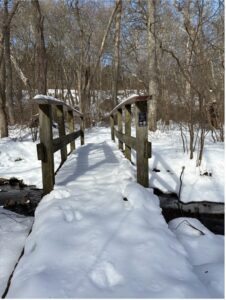
 I am standing on the Shady Glade bridge. The lack of footprints in the snow tells me that I am the first to be here in over a week. The mallard, who thought he had the stream for himself, swims around the corner out of sight. On the far bank a pair of tracks come down from the hill to the water. Tracks, not as a series of hoof prints, but as channels in parallel like cross-country ski tracks. Could this be an otter slide?
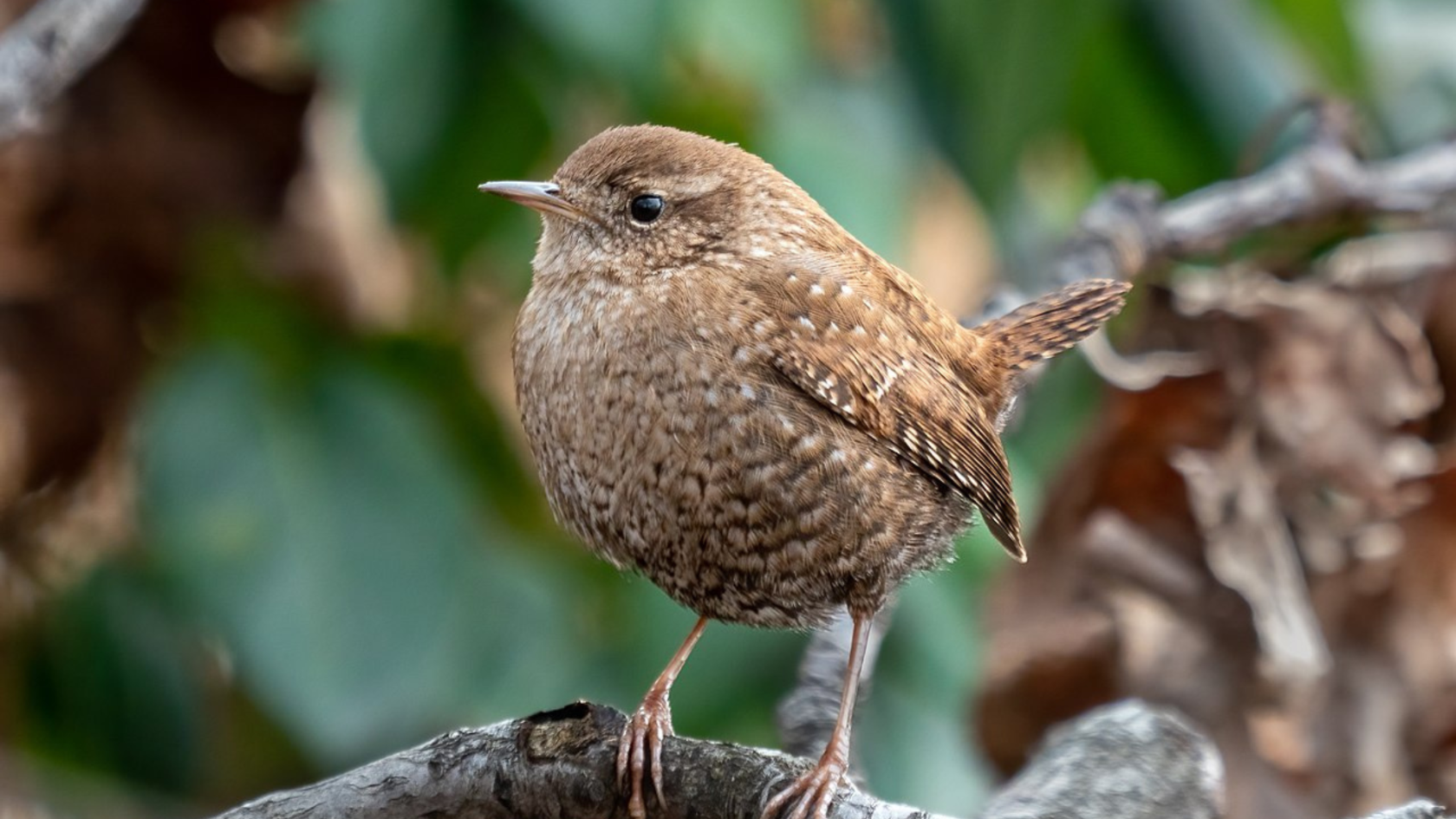
The stillness of this winter scene is disturbed by a dribbling sound, and a tiny brown bird pops up from behind a boulder ten yards away. I make the noise birders describe as phishing and the bird moves closer. My hunch is confirmed – Winter Wren, a bird that has been described as a ping pong ball with a tail.
Winter breed primarily in the evergreen forests of northern New England and Canada (Winter Wren Range Map, All About Birds, Cornell Lab of Ornithology) but have been found to breed in deciduous woods, too. They prefer older forests. Two nests were confirmed in western Rhode Island during the most recent breeding bird atlas. Birders at the Norman Bird Sanctuary are most likely to encounter winter wrens during the fall and winter months. When searching for winter wrens, don’t look in the treetops. These birds can be found near water or hopping around logs on the forest floor.
The thing that stands out the most about this diminutive forest dweller is its song. It is loud and goes on seemingly forever! Pound for pound, these 0.3-ounce birds pack a punch: they have more vocal power than a crowing rooster. When you are ping pong ball sized, down amongst fallen trees and branches maybe you need a long song to be found by a prospective mate.
In a winter landscape open water is as important to wildlife as food. When standing at the edge of the pond or by any stream looking for deer, mink, or otter, keep your ears open. You just might hear the loudest ping pong ball in your life.