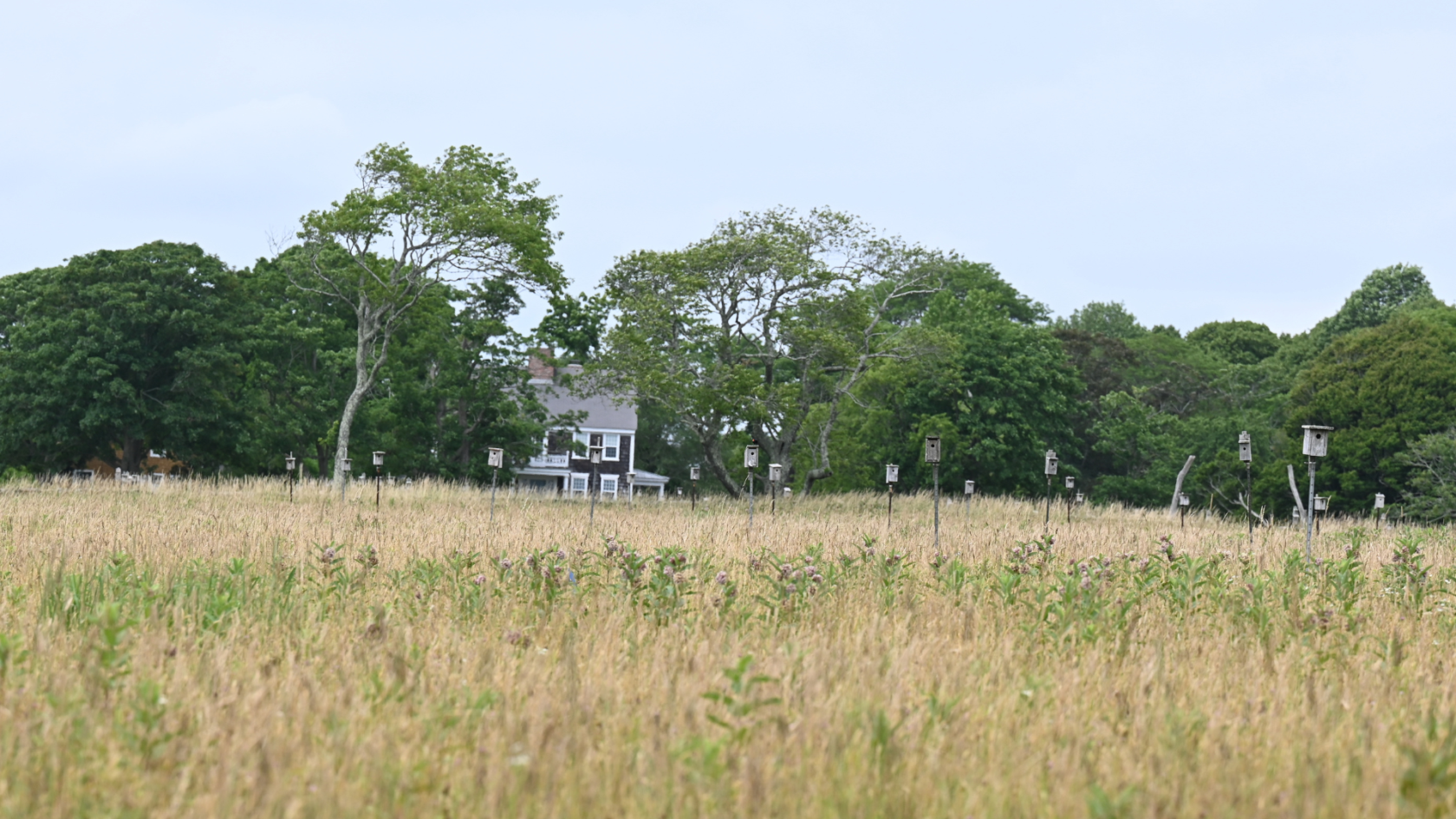
Two summers ago, my routine at Norman Bird Sanctuary (NBS) was quiet and steady: walk the coastal fields, open wooden nest boxes, and track the breeding success of Tree Swallows and their feathered neighbors. As a biology major at Franciscan University of Steubenville, Ohio, with roots in Rhode Island, spending my days surrounded by 318 active nest boxes in Alpha, Beta, and Polaris fields felt like a dream field assignment.
This year, my summer got a whole lot louder—and infinitely brighter.
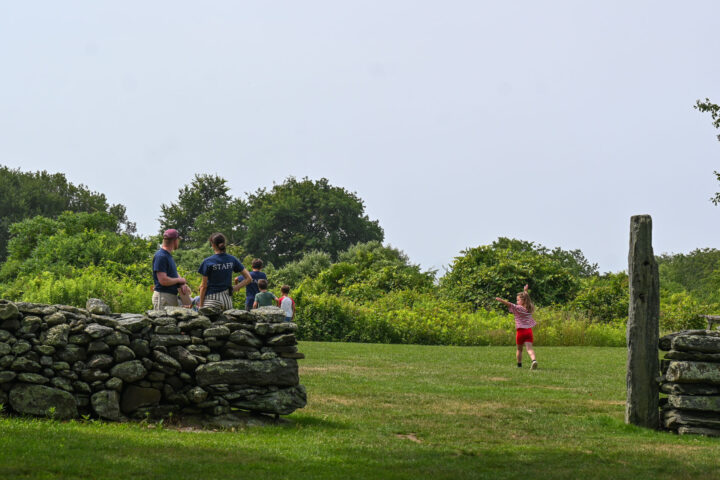
Alongside my research role collecting data for NestWatch, I took on a new title: Teacher Naturalist Alternate. Instead of sticking to a single field or camper cabin, I rotated across groups, supporting kids of all ages while keeping one foot firmly planted in field studies.
Bridging the Gap: Where Field Science Meets Camp Wonder
Wearing two hats wasn’t just a balancing activity, but an opportunity to turn Sanctuary research into hands-on outdoor education.
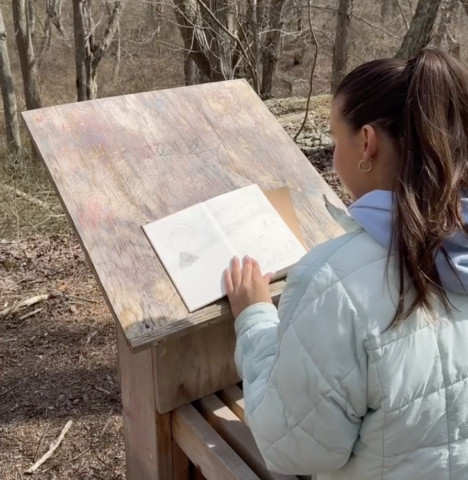
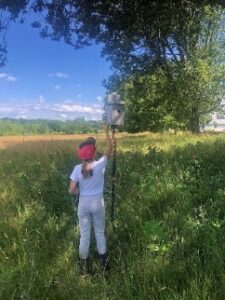 Throughout the summer, I translated raw nest box data into live field lessons for camp groups, explaining how migratory songbirds navigate to Middletown and why our nest boxes serve as crucial safe havens. Oh hikes, I used field encounters with birds to fuel spontaneous outdoor ecology lessons. With middle school campers, I trained them on monitoring nest boxes, walking them step-by-step through avian data collection protocols and using clip boards to record data.
Weathering the Storms (and the Swallows)
Field science and summer camp share one universal truth: both demand quick adaptability in the face of unpredictable chaos. Whether I was braving extreme summer heat waves, tracking egg counts while dodging protective, dive-bombing Tree Swallows, or keeping energy high for a cabin of loud campers through rainy-day downpours, each role required rolling with the punches. Balancing unpredictable field weather with the fast-paced demands of camp activities proved that whether you’re navigating nature or managing energetic kids, flexibility is the ultimate survival skill.
My time at Norman Bird Sanctuary taught me that gathering field data is only half the job, the other half is sharing it with people who will care for these habitats in the future. Teaching campers how to observe nature with curiosity and respect has made me a better biologist and a far more effective communicator.
As another season wraps up, I’m grateful for the Sanctuary, its staff, and all of the Campers who explored the fields with me. I hope to return and do it all over again next year!