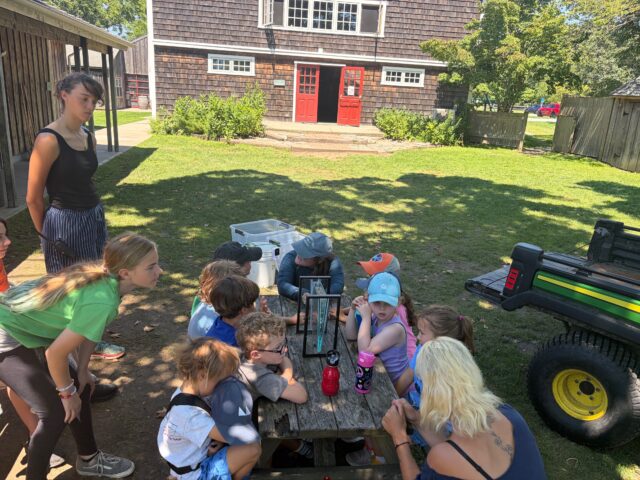
There is a wonderful buzz across the Sanctuary this month. Between the energy of summer campers returning to campus and our new pollinator meadow starting to bloom, the property is full of life. We kicked off the season with a great turnout at our first Summer Camp Friday Fiesta, complete with an impromptu “Dancing Queen” dance party. As we celebrate these summer milestones, we are also stepping into a new phase of stewardship and observation for our coastal pollinator meadow.
To help the habitat thrive long-term, we recently mowed most of the meadow following its spring bloom, leaving just one acre untouched as a dedicated observation plot. This specific acre showed the most successful initial growth, and keeping it intact gives us a front-row seat to see what persists and thrives naturally. Instead of using heavy machinery, we are managing this plot entirely by hand – carefully digging out invasive plants to protect the soil structure while we track how the ecosystem responds over time.
The rest of the meadow is now moving into a passive phase of observation and data collection. We want to see how the local ecology responds to our initial work. Our Director of Horticulture and Conservation, Joye Whitney noted that “year one is all about inquiry.” Every data point we collect now will shape how we manage the meadow for years to come.
If you enjoyed the stunning mix of poppies and bachelor’s buttons earlier this season, you were actually watching a clever piece of conservation design at work. Selected from Ernst Seeds with the support of the Natural Resources Conservation Service, these fast-growing annuals had an important job to do: they provided food for local pollinators while our slower-growing native perennials safely established themselves underneath.
And that strategy paid off beautifully. The early blooms successfully sustained a wave of local wildlife this spring. The field was alive with monarch butterflies, bumble bees, honeybees, American goldfinches, and native lady beetles – not to mention a fascinating mix of spiders and unique moth species that we are still identifying.
To help us dive deeper into studying these busy pollinator communities, we’ve also developed new demonstration plots in the meadow. Recently weeded and mulched by our fantastic Conservation Crew volunteers, these deer-proofed areas will soon feature interpretive signage for visitors. Unlike our wild observation acre, these plots are designed as active learning spaces that feature some of the more prominent native pollinator plants across the property. Here, we can closely track insect activity and showcase the science of pollinator habitats right alongside our guests.
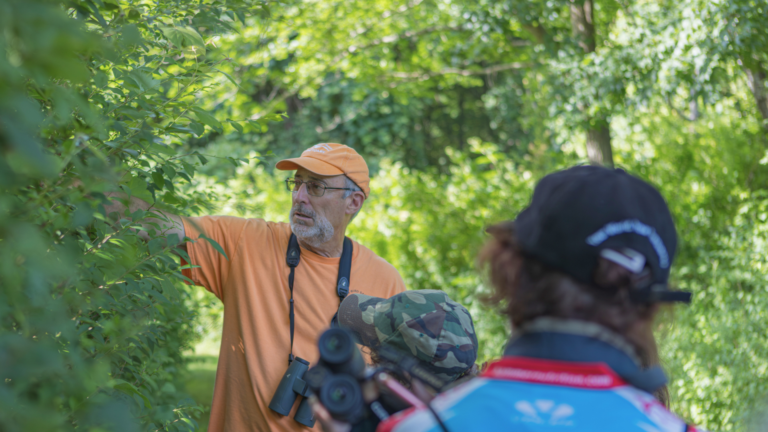
This vital data collection is powered by two summer interns and student researchers who are spending their summer mapping out our pollinator communities, documenting everything from familiar bees to lesser-known species. They’ve even been tracking our local spider populations – a great reminder that a healthy meadow relies on a whole web of creatures, including predators that keep the ecosystem in balance.
While it was bittersweet to see the beautiful pollinator meadow mowed, this step is vital to the long-term health of the ecosystem. It clears the way for a stronger, more permanent habitat to take root. We are grateful for your support and shared curiosity during this first year of inquiry, and we look forward to watching what blooms together as the seasons progress.
Stay Connected
Enjoyed this story? Our email subscribers receive updates like this first every other Friday, along with upcoming events, wildlife highlights, and behind-the-scenes news from around the Sanctuary. Join the flock and grab a membership to get weekly updates delivered straight to your inbox.