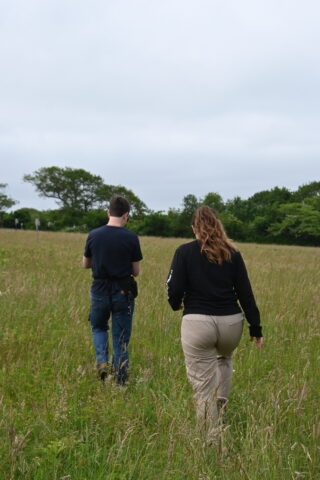
It is a frigid winter morning and the Hay Wagon Loop, the Norman Bird Sanctuary’s newest trail, is again a hub of bird activity. The Loop’s dense thickets provide shelter and there is an abundance of berries that supply the birds with needed energy boosting sustenance. The real secret of the Hay Wagon Loop, however, lies in its northwest corner. Bathed in sunlight and sheltered from the wind, it is a warm microclimate for both humans and birds on the coldest of days.
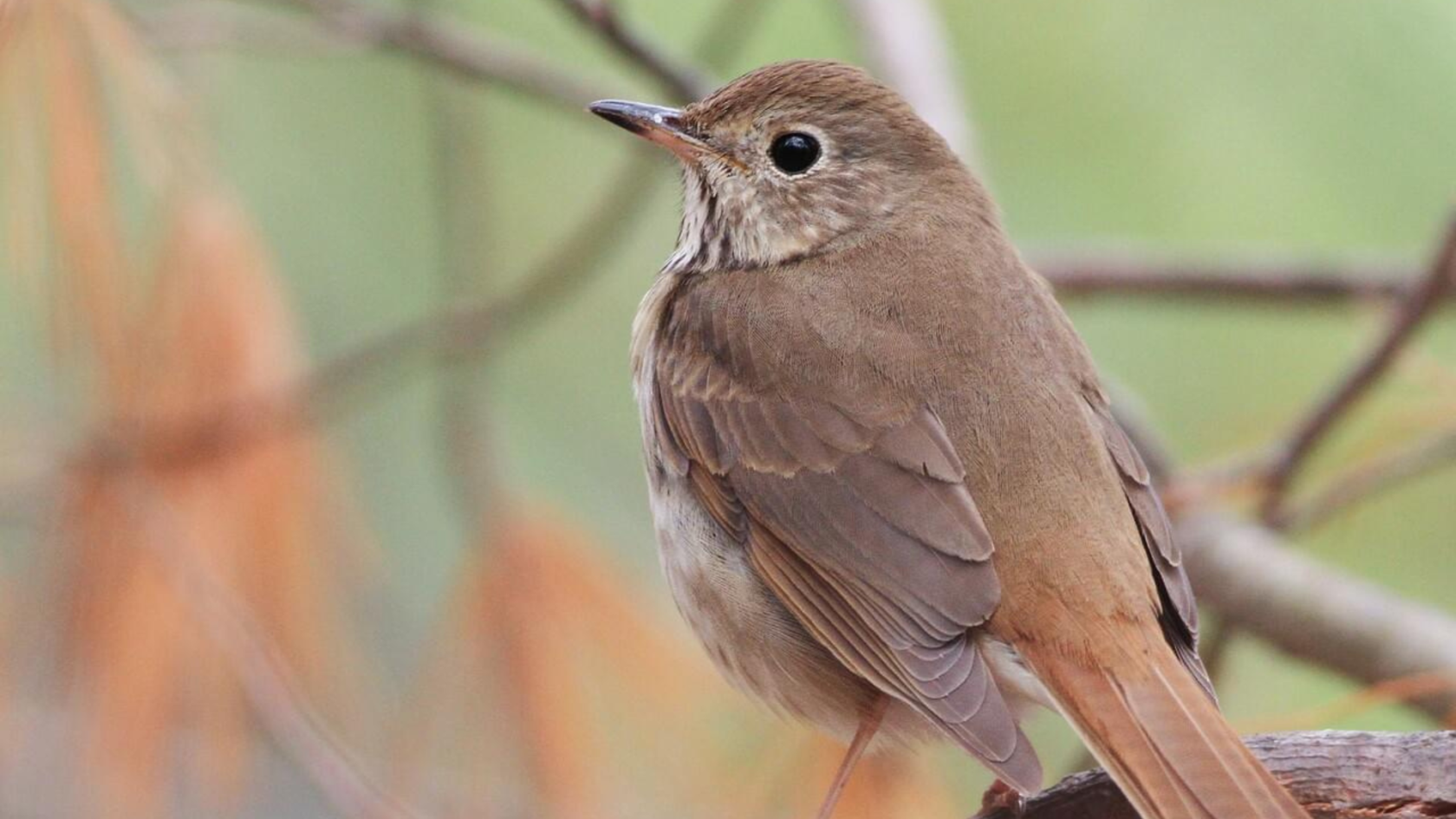
The reverie of my mid-winter sunbath is disturbed by a subtle “chuck, chuck” coming from the woods that border the trail. A Hermit Thrush calling! More often heard than seen, these birds seemingly melt into the landscape. You don’t see a Hermit Thrush; it lets you see it.
This smaller cousin of the robin gets its name for the solitary existence it leads during the non-breeding season. It has a spotted breast, dull brown back with a reddish tail that cocks up and down when the bird is at rest. Rhode Island is both the northern limit of their winter range and the southern limit of their breeding range (Hermit Thrush Range Map, All About Birds, Cornell Lab of Ornithology). These birds are forest dwellers.
The Norman Bird Sanctuary does not have the acreage of woods that Hermit Thrushes prefer for breeding, so we must think of them as winter visitors. This is truly unfortunate because Hermit Thrushes have one of the most beautiful songs in the bird kingdom. Similar to its cousin, the Wood Thrush, the songs of both birds have a distinctive flute-like quality. While the Wood Thrush belts out an “ee-oh-lay”, the Hermit Thrush adds an introductory note “wheet-ee-oh-lay.” One of my most magical summer memories is standing atop a seaside outcropping in Maine watching the sun setting over the Camden hills while listening to a chorus of Hermit Thrushes singing in the wood below to a darkening sky.
The next time you are hiking along the Hay Wagon Loop, or any of the trails through the woods, keep an ear attuned, and an eye if you are lucky, for our shy hermit of the forest.