Every fall and throughout the winter, sparrows fill the niche in our fields and woods that were occupied by warblers, bobolinks, and vireos in the spring and summer. These birds, often the bane of beginning birders in terms of identification, spend their days searching for the food that will carry them through the cold weather. And that search brings them to our feeders in large numbers when the ground is buried under many inches of snow.
The Norman Bird Sanctuary’s winter sparrow species includes song (a year-round resident), white-throated, swamp, and field. There is one species, however, that defies the little-brown-bird rap that sparrows receive: the fox sparrow.
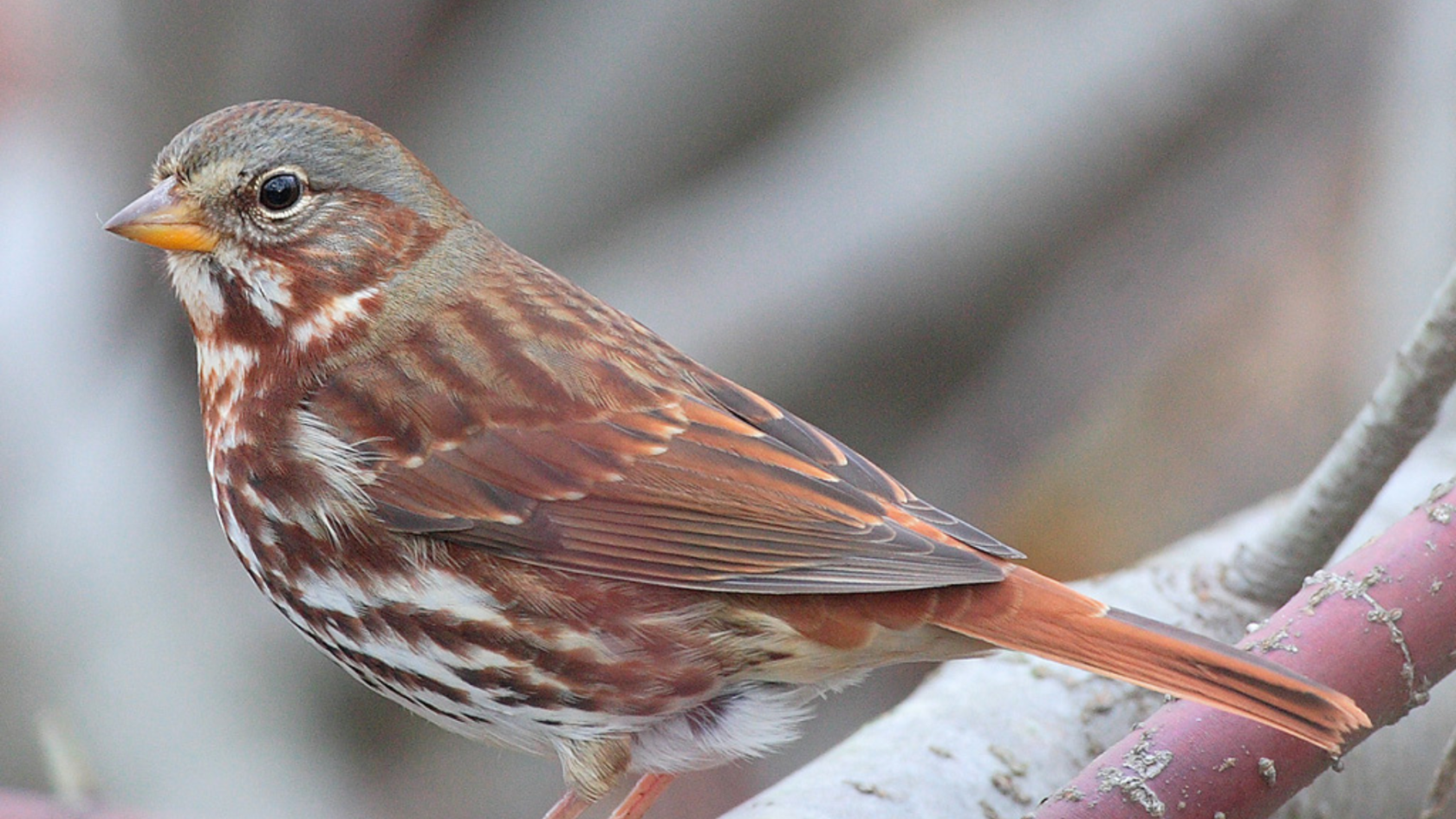
The fox sparrow is an uncommon visitor to the Sanctuary. It resembles the song sparrow but is longer with a chunkier appearance. Both have streaked breasts with a central breast spot. The difference is the fox sparrow’s streaks, back and tail are a rusty red color that, coupled with a grey face, stands out and gives the species its name. We are fortunate with the fox sparrows we see here. Fox sparrows can be found almost throughout North America (Fox Sparrow Range Map, All About Birds, Cornell Lab of Ornithology) and there are four subspecies, three of which are mostly dark brown or gray. We get the red/taiga version that best looks like its name.
Fox sparrows feed on the ground, so it’s more likely you’ll see them under our feeders than on them. Like other sparrows and towhees, they employ a double-scratch method (a hop forward and back while dragging their feet) to uncover seeds and small insects.
Pause and look at our feeders the next time you visit the Bird Sanctuary. You might be fortunate to see, with all apologies to ZZ Top, a sharp dressed sparrow.